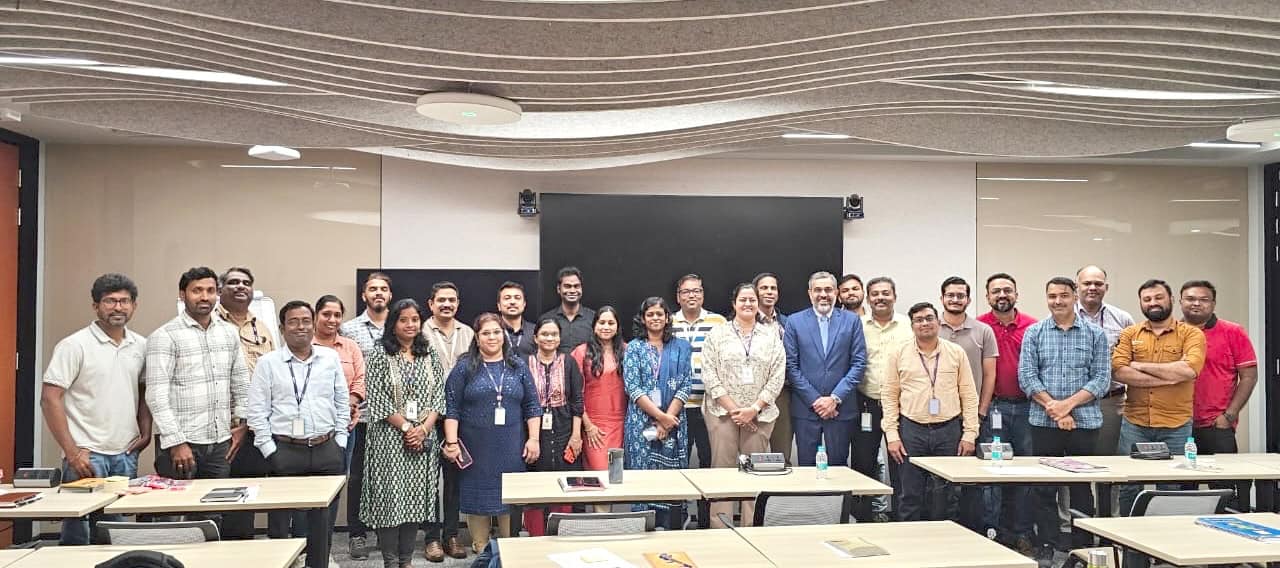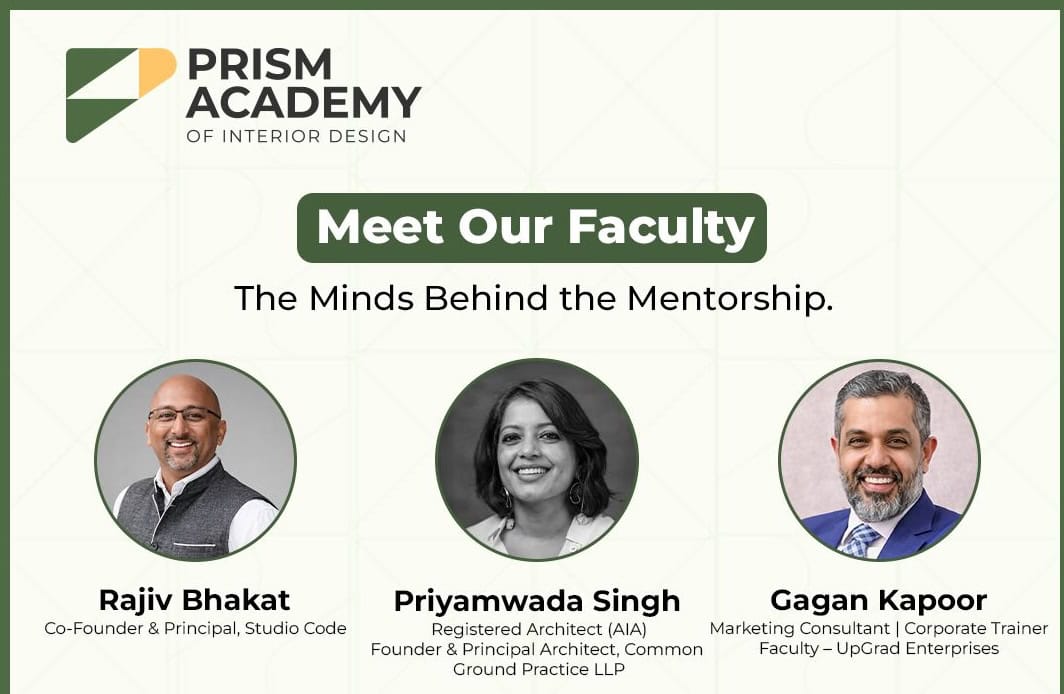
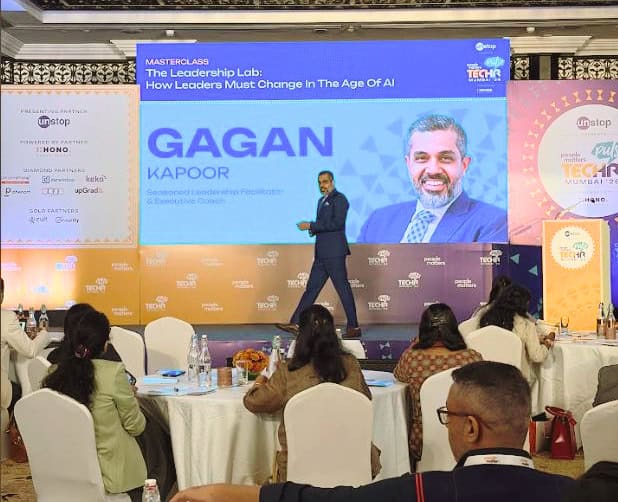
At the recently concluded People Matters Tech HR Pulse in Mumbai, HR leaders from across industries gathered to explore one of the most pressing questions facing modern organizations: What remains uniquely human in an AI-driven world?
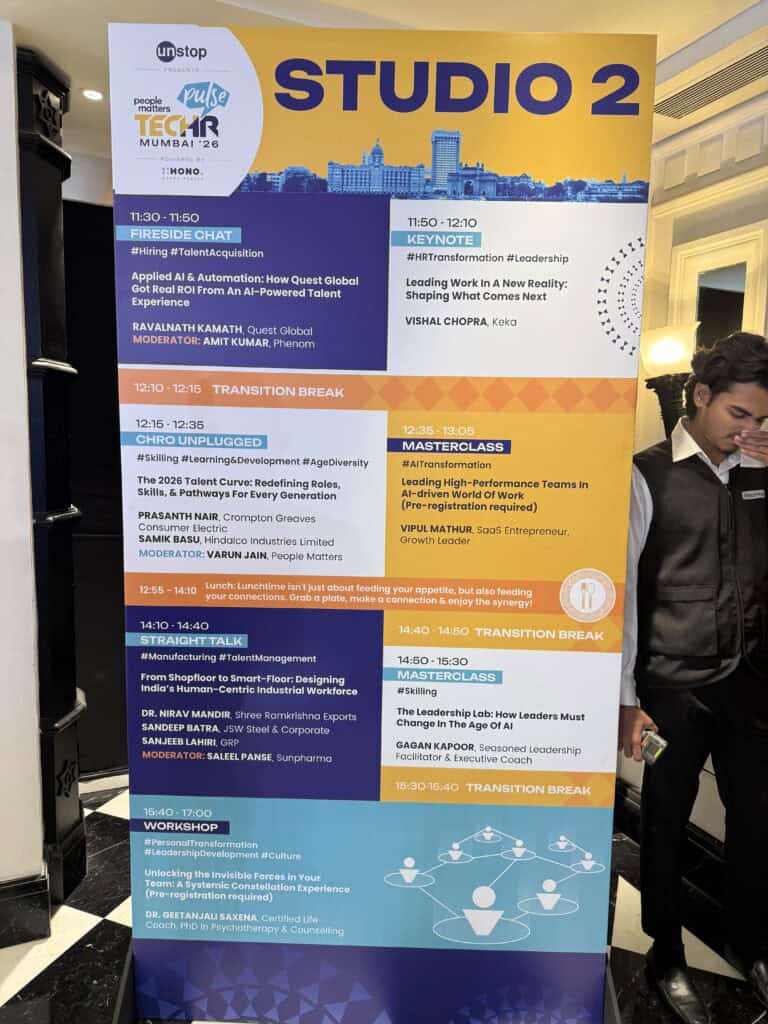
Representing upGrad Enterprise, our Marketing Consultant and Corporate Trainer, Gagan Kapoor led a thought-provoking session on “Emotional Intelligence (EI) in the Age of AI”, challenging leaders to rethink decision-making, leadership, and responsibility in an era where intelligence is increasingly automated.
As part of our ongoing work in leadership and growth consulting, this session reflects the kind of conversations we believe are critical for the future of leadership.
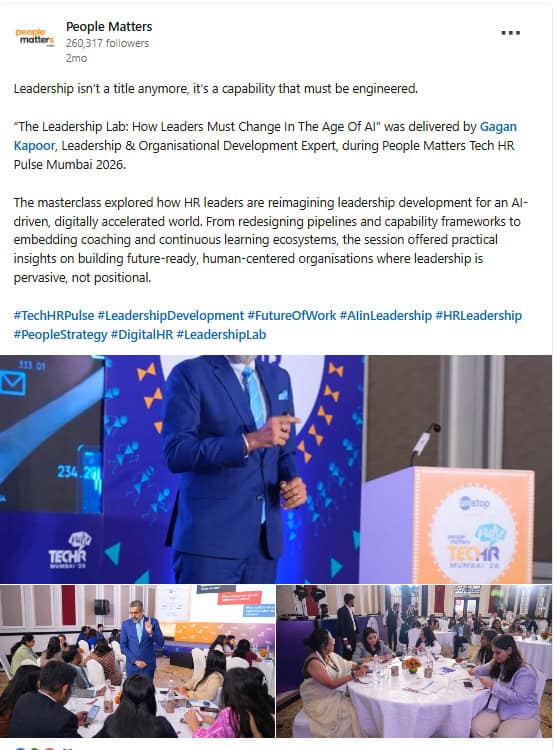
You may explore more about the event, agenda, and speaker lineup here on the official website for the TechHR Conference Mumbai 2026. You may also see the post below by People Matters here on LinkedIn in this page link.
From Intelligence to Judgement: The Leadership Shift
The session emphasized a critical shift:
As AI continues to scale intelligence, leadership must evolve to scale responsibility.
Gagan highlighted that while AI can process data, patterns, and probabilities at scale, it still cannot fully interpret intent, context, emotional nuance, trust, or ethical judgement. These remain deeply human capabilities — and increasingly, the differentiators of effective leadership.
“AI can recommend decisions. But it cannot own consequences. That responsibility still lies with leaders.”
The New Role of HR Leaders
In a rapidly transforming workplace, HR leaders are no longer just custodians of talent. The session positioned them as:
- Cultural architects shaping organizational behavior
- Ethical anchors guiding AI-driven decisions
- Risk managers balancing efficiency with human impact
A key insight that resonated strongly with participants was:
“Ethics cannot be automated. Someone must stand for them.”
The EI vs AI Dilemma in Decision-Making
Through a simulated “Triage Dilemma” exercise, participants were put into real-world decision scenarios — choosing between competing priorities such as:
- Performance vs. burnout
- Efficiency vs. inclusion
- Data vs. dignity
- Speed vs. empathy
The exercise surfaced an important realization:
AI can inform decisions, but it is emotional intelligence that resolves dilemmas.
Leaders reflected on the tension between algorithmic recommendations and human instinct — and the need to consciously apply judgement rather than blindly follow data.
Power Skills: The New Competitive Advantage
Drawing from global insights shared during the session, Kapoor reinforced that “power skills” — emotional intelligence, self-regulation, empathy, and ethical courage — are no longer soft skills, but strategic capabilities.
With organizations witnessing tangible business impact from investing in these capabilities, the conversation moved beyond theory to business relevance.
The Core Message: AI Creates Capability, EI Builds Credibility
The session concluded with a powerful leadership principle:
- Use AI for options. Use EI for ownership.
While AI accelerates outcomes, emotional intelligence creates legitimacy, trust, and long-term credibility.
For HR leaders, this means stepping into a larger role — not just enabling AI adoption, but ensuring that human judgment, fairness, and empathy remain central to organizational decisions.
A Timely Conversation for the Future of Work
As organizations continue to integrate AI across functions, the discussion served as a timely reminder that technology alone cannot define the future of work — leadership will.
And that leadership, more than ever before, will be measured not just by how fast decisions are made, but how human they remain.